Read Serene Urbanism: A biophilic theory and practice of sustainable placemaking - Phillip James Tabb file in PDF
Related searches:
Serene Urbanism: A biophilic theory and practice of sustainable
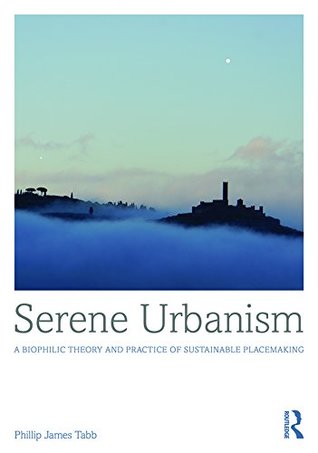
Serene Urbanism: A biophilic theory and practice of sustainable placemaking
Serene Urbanism: A biophilic theory and practice of - Amazon.com
Serene urbanism: A biophilic theory and practice of
Serene Urbanism : A Biophilic Theory and Practice of
Serene Urbanism A biophilic theory and practice of - Hoepli
Serene Urbanism: A Biophilic Theory and Practice of
Biophilic Design Applications: Putting Theory and Patterns into Built
Prof’s new book explores theory and practice of serene urbanism
(PDF) Biophilic theory and research for healthcare design
Biophilic Design: The Theory, Science and Practice of
Biophilic And Bioclimatic Architecture Analytical Therapy - NACFE
Innovative Biophilic Design and Planning: From Rooftop to
Green Infrastructure and Biophilic Urbanism as Tools for
Handbook of Biophilic City Planning and Design SpringerLink
Biophilic Design: Bringing Buildings to Life - The Theory
14 Patterns Of Biophilic Design To Improve Health And
Biophilic Design Applications: Psychological and
The Roles of Biophilic Attitudes and Auditory Stimuli within
Biophilic Design - GSA Sustainable Facilites Tool
Biophilic Urbanism: Designing Resilient Communities for the Future - 1
Biophilic Urbanism: Designing Resilient Communities - Goodreads
Biophilic Homes Prove Nature is the Best Medicine - NEO.LIFE
14 Patterns of Biophilic Design - Terrapin Bright Green
Biophilic design in architecture: Nature meets concrete
Biophilic design - Wikipedia
Biophilic streets: a design framework for creating multiple
Plastic flowers and mowed lawns: the exploration of everyday
Conceptualising a biophilic services model for urban areas
Exploring Biophilic Cities — Biophilic Cities
Biophilic Urban Acupuncture: The Importance of Biophilia in
Net positive biophilic urbanism Emerald Insight
Introduction to Biophilic Design biourbanism.org
BIOPHILIC DESIGN: THE ARCHITECTURE OF LIFE a documentary by
Bibliography Biophilic Urbanism
EXPANDING BIOPHILIC CITY DESIGN THEORY: A STUDY OF
Biophilic Urban Interventions
Socially-Organized Housing: Biophilia, Connectivity, and
NYC's plans for biophilic urban acupuncture Greenbiz
Academics in Biophilic Urbanism - Academia.edu
NYC's Plans for Biophilic Urban Acupuncture — Living
Biophilic Cities Lead the Way to Urban Sustainability – THE DIRT
Biophilic Design – PDF Download
Nature’s Cure: Using Biophilic Design to Enhance Healing
Biophilia Study: Keys to Employee Health and Wellness Buildings
Seven Principles of Biophilic Design SageGlass
Building for Biophilic Design Metal Architecture
Creating Positive Spaces using Biophilic Design
Biophilic urbanism builds on the theory that humans have an innate need to feel connected with nature, and explores ways to amplify its psychological and physiological benefits. Positive development contends that development must proactively increase nature in absolute terms (beyond pre-industrial conditions).
It’s a growing movement that interweaves natural and human-made elements into a construction. This design theory enables humans and nature to live and thrive together. If it doesn’t contribute to the health and productivity of the people within, it’s not a true biophilic design.
Biophilic design is a human centred approach aimed at improving our connection to nature and natural processes in the buildings that we live and work. This improved connection can benefit our wellbeing by reducing stress and improving recuperation – helping to cut costs and improve outcomes in the built environment.
Biophilic design: the theory, science and practice of bringing buildings to life.
Kellert said, instinctive responses to those natural elements “became genetically encoded, so that part of our emotional, intellectual, and physical well-being.
The definitive guide to this emerging practice of biophilic design, this book contains original and timely contributions from world-renowned scientists, designers, and practitioners on the theory.
Good biophilic design draws from influential perspectives – health conditions, socio-cultural norms and expectations, past experiences, frequency and duration of the user experience, the many speeds at which it may be encountered, and user perception and processing of the experience – to create spaces that are inspirational, restorative, and healthy, as well as integrative with the functionality of the place and the (urban) ecosystem to which it is applied.
“bua is the theory that threads and nodes of biophilic interventions in specific urban places can help improve people’s moods, connect people to place, help improve mental health. It is more effective in dense cities versus suburban places due to the ease of pedestrian mobility.
Recognizing the opportunity to connect a growing urban majority with nature as an element of daily life, biophilic cities is an organisation that facilitates an international network of cities striving to build a flourishing connection to nature.
Jan 20, 2020 biophilic design claims that humans have an innate affinity towards nature and that their connection is beneficial.
Dec 24, 2020 loftgarten's green class imagines a cinema experience where the feature film is a jungle.
Biophilia is the theory that people possess an inherent affinity for nature, which developed during the long course of human evolution. In recent years, studies have revealed that this inclination continues to be a vital component to human health and wellbeing.
Synopsis biophilic design is an innovative way of designing the places where we live, work, and learn. We need nature in a deep and fundamental fashion, but we have often designed our cities and suburbs in ways that both degrade the environment and alienate us from nature.
Enter your email address to subscribe to this blog and receive notifications of new posts by email.
In 1994, the transect was revitalized as an ordering system at the congress for the new urbanism (cnu), when the group — proponents of “density, connectivity, and contiguity” — sought a theory establishing connections between elements of urbanism. The rural-to-urban transect did so by defining six recognizable transect zones and their.
Divided into six parts, the handbook begins by introducing key ideas, literature, and theory about biophilic urbanism. Chapters highlight urban biophilic innovations in more than a dozen global cities. The final part concludes with lessons on how to advance an agenda for urban biophilia and an extensive list of resources.
In response, parti of this book establishes the theoretical framework through different contemporary perspectives, and concludes with a clear explanation of a theory of serene urbanism. The positive characteristics of urbanism and beneficial qualities of the serene are explored and related to sustainability, biophilia, placemaking and environmental design.
Serenity is becoming alarmingly absent from our daily existence, especially within the urban context.
Biophilic urbanism provides readers with the tools to create more nature-based urban environments that are climate positive, sustainable, and healthy. The principles of biophilia are intended to support appreciation and direct engagement with nature, toresponsibly utilize on-site natural resources, to plan according to climatic conditions and local ecological processes.
Biophilic design is about humanitys place in nature and the natural worlds place in human society, where mutuality, respect, and enriching relationships can and should exist at all levels and should emerge as the norm rather than the exception.
The biophilia hypothesis (also called bet) suggests that humans possess an innate tendency to seek connections with nature and other forms of life. Wilson introduced and popularized the hypothesis in his book, biophilia (1984). He defines biophilia as the urge to affiliate with other forms of life.
Meant to help define biophilic buildings – nature in the space, natural analogues and nature of the space – and a preliminary list of “biophilic conditions”. New research and insights from the neurosciences, endocrinology and other fields have since helped evolve the scientific basis for biophilic design.
Com: serene urbanism: a biophilic theory and practice of sustainable placemaking (9781472461377): tabb, phillip james: books.
Biophilic design seeks to connect our inherent need to affiliate with nature in the modern built environment. An extension of the theory of biophilia, biophilic design recognizes that our species has evolved for more than 99% of its history in adaptive response to the natural world and not to human created or artificial forces.
Serene urbanism: a biophilic theory and practice of sustainable placemaking.
In the 2008 book, which he edited with judith heerwagen and martin mador, “biophilic design: the theory, science and practice of bringing buildings to life,” he presented a list of six biophilic design elements and 72 biophilic design attributes that create a guideline for those looking to achieve biophilic design in the modern built.
Biophilic urban acupuncture (bua) is the theory that threads and nodes of biophilic interventions in specific urban places can help improve people’s moods, connect people to place and help improve mental health. Biophilic urban acupuncture blends two very important design concepts, biophilia and urban acupuncture.
The biophilia hypothesis is the idea that humans have an inherited need to connect to nature and other biotic forms due to our evolutionary dependence on it for survival and personal fulfillment.
One way to think about biophilic design is to see it as a continuum as shown below. As one moves from a biophobic to a biophilic space, there is an in-between space (bio-indifference) that eliminates the negative aspects of biophobia, but does not contain the natural features and attributes that promote health.
Environments created according to the principles of serene urbanism facilitate vibrant social interaction and contemplative spiritual reflection via the skillful and diverse pairing of urbanism and nature, said thomas barrie and julio bermudez in the foreword to tabb’s book, “ serene urbanism: a biophilic theory and practice of sustainable placemaking.
The positive characteristics of urbanism and beneficial qualities of the serene are explored and related to sustainability, biophilia, placemaking and environmental design. Both principles and examples are presented as compelling portraits for the proposal of these new urban landscapes.
Augustin, who regularly works with interior designers and architects to incorporate biophilic design principles, says that for those living and working in urban homes without much natural light, it can be draining to be indoors.
The authors highlight seven archetypal cities exhibiting green urbanism: the renewable energy city, the bioregional carbon neutral city, the distributed city, the biophilic city, the eco-efficient city, the place-based city and the sustainable transport city.
Biophilic urban acupuncture (bua) is the theory that threads and nodes of biophilic interventions in specific urban places can help improve people’s moods, connect people to place, and help improve mental health. Biophilic urban acupuncture blends two very important design concepts, biophilia and urban acupuncture.
Green infrastructure and biophilic urbanism as tools for integrating resource efficient and ecological cities. Abstract in recent decades, the concept of resource efficient cities has emerged as an urban planning paradigm that seeks to achieve sustainable urban environments. This focus is upon compact urban environments that optimise energy, water and waste systems to create cities that help solve climate change and other resource-based sustainability issues.
Literature, it is found that there are few research studies regarding biophilia theory, biophilic design or emotional design conducted in the context of furniture design and more specifically in fdlo’s. For example, ulrich (1981) demonstrated the effects of natural and urban scenes towards psychophysiological (psychology and physiology) aspects.
The biophilia hypothesis, then, turns architecture and urban design on its head — construction is not fundamentally driven by utilitarianism but is instead a contributing factor for our continued health.
The urban geometry never establishes a common social value among the residents, hence leads to a serious lack of socialization. Biophilic design: the theory, science and practice of bringing.
Serene urbanism: a biophilic theory and practice of sustainable placemaking by phillip james tabb. Pserenity is becoming alarmingly absent from our daily existence, especially within the urban context.
The practice of incorporating nature and natural elements into the built environment — known as biophilic design — has been proven to measurably reduce stress, enhance cognitive function and creativity, and expedite healing. And this translates to increased productivity, healthcare cost savings, and reduced turnover.
According to the paper, biophilia, “as a field of applied science, is the codification of history, human intuition and neural sciences showing that connections with nature are vital to maintaining a healthful and vibrant existence as an urban species.
He also explores beneficial qualities of urbanism and serenity and relates them to sustainability, placemaking, environmental design and biophilia, a concept introduced by biologist edward wilson that suggests an instinctive bond between human beings and other living systems.
Biophilic urbanism: designing resilient communities for the future. 00 avg serene urbanism: a biophilic theory and practice of sustainable placemaking.
Biophilic designed buildings incorporate things like natural lighting and ventilation, natural landscape features and other elements for creating a more productive and healthy built environment for people.
Biophilic design patterns at different scales perhaps one barrier to the uptake of biophilic design is that it’s seen as an expensive option. So, to change this view, we have provided biophilic design solutions at a range of scales and costs (from having no budget at all to splashing the cash), using terrapin bright green’s “ 14 patterns.
Download citation serene urbanism: a biophilic theory and practice of sustainable placemaking serenity is becoming alarmingly absent from our daily existence, especially within the urban context.
Biophilic urbanism represents the idea of integration of urban nature into cities and proffers a design principle to inform intentional and functional use of natural or “biophilic” elements, such as city and pocket parks, linear green space, and green roofs and walls in the built environment (beatley, 2011).
Tim beatley has long been a leader in advocating for the greening of cities.
Dec 20, 2020 biophilic urbanism provides readers with the tools to create more natur serene urbanism: a biophilic theory and practice of sustainable.
Integration of biophilic elements such as vegetation within our built environments can be a very effective means of addressing several problems of modern cities and buildings.
The science and benefits of biophilic design on human health, childhood development, healthcare, and more. * the practice of biophilic design-how to implement biophilic design strategies to create buildings that connect people with nature and provide comfortable and productive places for people, in which they can live, work, and study.
Serene urbanism a biophilic theory and practice of sustainable placemaking 1st edition by phillip james tabb and publisher routledge. Save up to 80% by choosing the etextbook option for isbn: 9781317057031, 1317057031.
The international society of biourbanism is a not-for-profit scientific network for theory and practice in architecture and urbanism. It supports education, research, and publishing about biourbanism as a new epistemological approach to cities and biophilic design.
Recognizing this inherent human need to connect with nature, biophilic city design theory suggests integrating nature into the design, planning, and management of a city through various biophilic urban design strategies that range in scale from buildings to regions.
The bullitt center, located in seattle, washington, was completed in 2013 by the bullitt foundation. The bullitt foundation is a philanthropic organization with the mission of making the pacific northwest a global leader and model in sustainability, as well as to protect the natural environment by promoting environmentally responsible living.
And spirituality also published by routledge in 2015, serene urbanism: a biophilic theory and practice of sustainable placemaking, published by routledge.
Post Your Comments: