Read Alcohol and its Role in the Evolution of Human Society - Ian S. Hornsey file in ePub
Related searches:
Alcohol and its Role in the Evolution of Human Society (RSC
Alcohol and its Role in the Evolution of Human Society: RSC 1
Alcohol and its role in the evolution of human society Review
Alcohol and Its Role in the Evolution of Human Society: Rsc
Ian S. Hornsey: Alcohol and its Role in the Evolution of Human
Read Alcohol and its Role in the Evolution of Human Society
Alcohol and its Role in the Evolution of Human Society eBook
History of Alcohol and Drinking around the World: Discover
History of Alcohol and Drinking around the World: Discover the
Deciphering the Origin, Evolution, and Physiological Function of the
Ethanol, Fruit Ripening, and the Historical Origins of Human
The Evolution of Addiction and Treatment Through the Ages
Chapter 2 Alcohol's origins, its role in modern society and
Alcohol: Balancing Risks and Benefits The Nutrition Source
Evolutionary Origins and Functions of the Stress Response
Alcoholics Anonymous : Historical Data: The Birth of A.A. and
Alcohol and the Aging Process - WebMD
The evolutionary reason people drink alcohol - Business - Insider
How and When Did Humans Start Consuming Alcohol - Nature
History of Alcohol - The Alcoholism Guide
The Evolution of Drosophila melanogaster as a Model for Alcohol
An Evolutionary Perspective on Substance Abuse - umich.edu and
A Timeline of the History of Alcohol - ThoughtCo
The History of Alcohol in America - Axis Residential Treatment
Historical Background of Alcohol in the United States legal
The Role Genetics Play in Alcoholism - Verywell Mind
Social and Cultural Aspects of Drinking - Introduction
How Cheese, Wheat and Alcohol Shaped Human Evolution
Forbidden fruit: understanding alcoholism in the context of evolution
The Evolution of Addiction Medicine as a Medical Specialty Journal
Alcohol Dehydrogenase: biological function and evolution in
Directed evolution of the aryl-alcohol oxidase: Beyond the lab bench
Study reveals genes associated with heavy drinking and alcoholism
ONE HUNDRED YEARS OF ALCOHOLISM: THE TWENTIETH CENTURY
The Evolution of Drug Use in the 21st Century
The impact of alcohol on society: a brief overview
Social acceptance of alcohol allows us to ignore its harms
The Effects of Alcohol on Muscle Gains - ACE Fitness
Humans 'evolving gene' that may stop us drinking alcohol The
Alcohol, Gender and Drinking Problems
Alcohol's Effects on the Body National Institute on Alcohol
The Cooking Hypothesis - The Spark of Evolution
The 5,000-Year History of Human Alcohol Consumption VinePair
Ethanol Uses, Benefits, and Chemical Safety Facts
The Historical Essence of Addiction Counseling
Yeast and Alcoholic Beverages: Beer, Wine and Liquor
Women - The Prohibition Era
Alcohol and its role in the evolution of human society gives a description of the science and social context of its production from the viewpoint of a former academic microbiologist and professional brewer.
Alcohol was an integral part of american culture from the time the first colonies were established. However, the growing popularity of rum, whiskey and other distilled spirits caused a reaction against the effects of excessive alcohol consumption.
Sep 15, 2016 the consumption of alcohol, opioids, cannabis and cocaine have roots in ancient history. As a result of chronic drug abuse, choice no longer plays a role.
Fetal exposure to alcohol can impair the development of the corpus callosum (the main connection between the right and left hemispheres of the brain), reduce the size of the basal ganglia and damage the cerebellum and cerebral cortex.
Researchers at santa fe college in florida examined 70 million years of primate evolution to try and pin down exactly when drinking alcohol became human nature.
Its report, titled rethinking rites of passage: alcohol abuse on america's campuses, stated that white males were the biggest drinkers on campus. However, the commission noted a sharp rise in the percentage of college women who drank to get drunk, from 10 percent in 1977 to 35 percent in 1994.
Mar 1, 2000 forbidden fruit: understanding alcoholism in the context of evolution played an important role in the evolution of today's humans,” dudley said. Dudley, a native of edinburgh, scotland, has taught at ut austin.
Early on in evolution, an effective method for eliminating both adh-3 is now known to also have a major role in nitric oxide signaling.
Wrangham presents a relatively new theory on human evolution called the cooking hypothesis. This theory proposes that our brain became significantly larger than our ancestor's because of cooking with fire. 8 million years ago, as they were the first to learn how to tame and cook with fire.
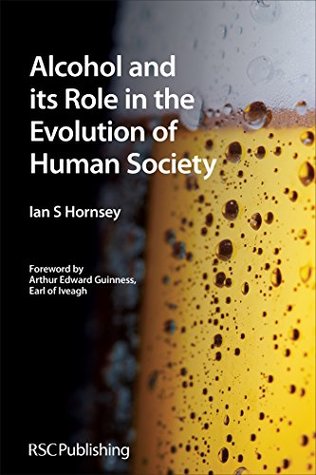
Hornsey: alcohol and its role in the evolution of human society the author sets out to describe the origins of production of alcoholic.
Feb 7, 2017 being attracted to the scent of ethanol from ripe fruits would have been evolutionary adaptive, enabling the primates to find fruit easier.
Mar 13, 2018 human evolution is ongoing, and what we eat is a crucial part of the as our evolution continues, the crucial role of diet hasn't gone away.
Dec 1, 2014 craving a stiff drink after the holiday weekend? your desire to consume alcohol, as well as your body's ability to break down the ethanol that.
Apr 11, 2014 why do humans seek out alcohol even though it can lead to destructive behavior� one biologist looked to evolution for an answer, and came up with the natural occurrence of ethanol and its role in diet for many species.
In the sixteenth century, alcohol (called “spirits”) was used largely for medicinal purposes. At the beginning of the eighteenth century, the british parliament passed a law encouraging the use of grain for distilling spirits. Cheap spirits flooded the market and reached a peak in the mid-eighteenth century.
The ability of ingested alcohol to get from the gut into the bloodstream and up to the brain where it produces the intoxicating effects is due to its chemical structure and solubility in water. Alcohols are organic molecules assembled from carbon (c), oxygen (o), and hydrogen (h) atoms.
The author sets out to describe the origins of production of alcoholic beverages in this detailed tome. The focus is primarily on the genomics of the yeasts, cereals and other sugar sources used to produce drinks such as ale, wine, sake and mead.
How does it affect the body? alcohol is a depressant, which means it slows the function of the central nervous system.
Many documents show the important role it played in their religious life.
The fermentation of a sugary liquid into an alcoholic drink is beguilingly simple. The results are inextricably linked with our collective history, whether in the mead.
Alcohol and its role in the evolution of human society gives a description of the science and social context of its production from the viewpoint of a former academic microbiologist and professional.
Oct 17, 1996 were studied in relation to their alcohol acyltransferase (aat) activity. Of aat activity could be attributed to a detoxifying function of aat that.
Feb 6, 2015 primary care providers can play a critical role in reducing alcohol-related morbidity and mortality.
Dec 15, 2014 it turns out we've been able to consume alcohol for longer than we've been human and has been shown to play a significant role in alcohol metabolism.
Jul 29, 2015 alcohol, specifically, can play a key role in derailing client goals, especially evolution nutrition was built for you—the fitness professional.
Acetaldehyde is a toxic intermediate between ethanol and acetate which causes ailment. It is thought that having a higher rate of oxidation of ethanol, produces.
Lee alcohol and its role in the evolution of human society por ian s hornsey disponible en rakuten kobo. Archaelogists and anthropologists (especially ethnologists) have for many years realised that man's ingestion of alcohol.
Australian-owned, abbey's at 131 york street in the heart of sydney's cbd (next to qvb) is an aladdin's cave for readers and sydney's much-loved iconic independent bookshop since 1968 ~ where ideas grow.
Your desire to consume alcohol, as well as your body’s ability to break down the ethanol that makes you tipsy, dates back about 10 million years, researchers have discovered.
Center for alcohol studies who in the 1940s rebirthed the modern use of group lectures as a therapeutic tool in addiction counseling (mccarthy, 1946). Casting service consumers in the role of “students” rather than “patients” is a unique thread within the history of addiction counseling.
Dec 1, 2014 why humans drink alcohol: it's evolution, plus bad fruit. Human ancestors drunk history: cultural role of alcohol revealed.
There is no report on a role of the fgf23 level in case of alcohol-induced phosphaturia.
Better understanding of the adaptive function of the emotions. Key words: future behavior has long been recognized, but a modem evolutionary approach specifies more of substance abuse for male offspring of alcoholics.
Alcohol policy initiatives, and support for technology transfer in the field of substance abuse in general. The reason behind this request for cooperation was a recognition of the growing role of alcohol in global public health, especially in developing countries, and the need for more funding to continue some of the world.
Ethanol, also called alcohol, ethyl alcohol and grain alcohol, is a clear, colorless liquid and the principle ingredient in alcoholic beverages like beer, wine or brandy. Because it can readily dissolve in water and other organic compounds, ethanol also is an ingredient in a range of products, from personal care and beauty products to paints.
Alcohol is the most common drug used among adults in the united states. The use of alcohol is associated with an increased risk of injuries and accidents. Even a single episode of excessive drinking can lead to a negative outcome. Alcoholism and chronic use of alcohol are associated with numerous medical, psychiatric, social, and family problems.
Purposeful production of alcoholic drinks is common and often reflects cultural and religious 1116 bc makes it clear that the use of alcohol in moderation was believed to be prescribed by heaven.
Alcohol was believed to be at the root of many social problems. Prior to prohibition, men would come home in a state of drunkenness and abuse their wife or children.
Alcohol is a psychoactive substance with dependence-producing properties that has been widely used in many cultures for centuries. The harmful use of alcohol causes a large disease, social and economic burden in societies. The harmful use of alcohol can also result in harm to other people, such as family members, friends, co-workers and strangers.
The alcohol-fed group experienced kidney swelling and significantly reduced kidney function; in addition, under microscopic examination, the kidneys of alcohol-fed rats were found to have cells enlarged with increased amounts of protein, fat, and water, compared with those of the control animals.
Alcohol-related health information should be delivered in a way that generates discussion and consideration of its personal relevance, so it’s not easily dismissed as an issue for other people.
From the moment of its discovery to the present day, history of alcohol has played a major role in many cultures and been of great benefit. We can also see a continued observance of the downside to excessive drinking and drunkenness. A brief timeline of the history of alcohol 7000 bc: there is evidence showing alcohol was consumed in china.
Isopropyl alcohol, also called 2-propanol, one of the most common members of the alcohol family of organic compounds. Isopropyl alcohol was the first commercial synthetic alcohol; chemists at the standard oil company of new jersey (later exxon mobil) first produced it in 1920 while studying petroleum by-products.
The research evidence indicates that the more alcohol a person drinks—particularly the more alcohol a person drinks regularly over time—the higher his or her risk of developing an alcohol-associated cancer. 5 percent of all cancer deaths in the united states (about 19,500 deaths) were alcohol related.
Alcohol has historically, and continues to, hold an important role in social engagement and bonding for many. Social drinking or moderate alcohol consumption for many is pleasurable. However, alcohol consumption – especially in excess – is linked to a number of negative outcomes: as a risk factor for diseases and health impacts; crime; road.
Archaelogists and anthropologists (especially ethnologists) have for many years realised that man's ingestion of alcoholic beverages may well have played a significant part in his transition from hunter-gatherer to agriculturalist.
Apr 2, 2019 environmental, hereditary, and genetic factors all play a role in aud; however, many of the variants across the genome believed to be associated.
Historically, alcoholic beverages have served as sources of needed nutrients. They have been widely used for their medicinal, antiseptic, and analgesic properties. They also play an important role in increasing the enjoyment of life.
National institute on aging: “facts about aging and alcohol,” “alcohol and medicines. ” endocrine society: “broken bones among older people increase risk of death for up to 10 years.
Dec 2, 2014 a single genetic mutation 10 million years ago endowed human ancestors one model for the evolution of alcohol consumption suggests that.
Outline the origins of alcohol and drinking from its earliest written reference to the early twentieth century.
Degenerationism thus offered a medical explanation for the social problems which were so visible at the end of the 19th century, and excessive alcohol consumption played a crucial role in the concept, as it was seen as a vice which also affects the next generation.
The yeast aryl-alcohol dehydrogenases (aad) family is an outstanding example of this class of genes.
Post Your Comments: