Read online Intellectual and Empire in Greco-Roman Antiquity - Philip R Bosman file in ePub
Related searches:
Intellectual and Empire in Greco-Roman Antiquity - 1st Edition - Phili
Intellectual and Empire in Greco-Roman Antiquity – Bryn Mawr
Intellectual and Empire in Greco-Roman Antiquity - Amazon.com
Intellectual and Empire in Greco-Roman Antiquity - Bookshop
Intellectual and Empire in Greco-Roman Antiquity Taylor & Francis
Empire and Ideology in the Graeco-Roman World
Intellectual and Empire in Greco-Roman Antiquity - Google Books
Intellectual and Empire in Greco-Roman Antiquity Philip R
Intellectual and Empire in Greco-roman Antiquity Free Shipping!
Intellectual and 新作続 Empire in Antiquity Greco-Roman
Greco-romansHow was Islam a preserver and a conduit of the
Timeline of Greek and Roman Philosophers
Lecture 20: Charlemagne and the Carolingian Renaissance
The Western Revival and Influence of Greco-Roman Medical
Plutarch and Rome - Wiley Online Library
Magic and Magicians in the Greco-Roman World
(PDF) The Greco-Roman and Jewish Contributions to the Growth
Ancient Chinese and Mediterranean Empires
Skin Color Didn’t Matter to the Ancient Greeks and Romans
Islam’s pivotal role in Europes intellectual and cultural rebirth
The Earth and Its People, A Global History, AP Edition, 5th ed.
(PDF) Intellectual Discourse and Global Connectivity in the
How do the achievements of Ancient Greece and Rome in art
Islam’s pivotal role in Europe’s intellectual and cultural
Culture, Religion, and Politics in the Greco-Roman World
Greco-Roman Cultures And Its Influences On Greek And 123
Decline of Empire: Parallels Between the U.S. and Rome, Part
Philosophy, Rhetoric, and Sophistry in the High Roman Empire
Relationship between the Renaissance and the Greco-Roman
Jews, Greeks and Romans History Today
Aug 27, 2011 as the first quote below the title shows, two centuries later, some greek intellectuals already viewed the roman empire as the direct successor.
By cynthia stokes brown, adapted by newsela eventually swallowing the greeks as part of the roman empire. Location and food which greco-roman ideas entered european intellectual life.
Bowersock, greek sophists and the roman empire (oxford 1969), 21-25. Tyre: the platonist maximus; heraclitus, fellow-student of antiochus of ascalon.
The intellectual culture of the first centuries of the roman empire was a fusion in which greek writers spent time in rome, wrote about roman history see full.
The term greco-roman world (also greco-roman culture / ˌ ɡ r i k oʊ ˈ r oʊ m ən / or / ˌ ɡ r ɛ k oʊ ˈ r oʊ m ən /; spelled graeco-roman in the commonwealth), as understood by modern scholars and writers, refers to geographical regions and countries that culturally - and so historically - were directly and intimately influenced by the language, culture, government and religion.
For better or worse, the religious environment in the roman empire, the period in the greco-roman world, at the start of the 1st century ce, was polytheistic. He went so far as to claim plato as the intellectual descendant of mose.
With the entry of the empire, times become even more turbulent, men feel internally more insecure and anxious. At the extreme point of this uneasiness of the times, the figure of christ suddenly appears on the scene of the dejected world, who says of himself that he is the light of the world, the resurrection and life.
Ephesus would remain a leading intellectual center with the famous celsus library and the second school of philosophy in this part of the world. It was the third largest in the ancient world, after alexandria on the coast of egypt and pergamon.
If so, why were arab scholars translating greek texts so important in returning to believe, however, the byzantine empire did retain greco-roman knowledge. Second, the eastern romans were very guarded with their intellectual prope.
Among the great emperors of the roman empire stand augustus and marcus of the shared religious, cultural, and intellectual traditions of the greco-roman.
Check out our top free essays on greco roman influence to help this intellectual the byzantine empire of the late 11th century and the eastern mediterranean.
Christianity was introduced to bring the empire together and create a society linked together through religion. Another principle that motivated greco-roman culture was art and innovation. With the greeks advanced art and innovation, the greco-roman empire was able to create new and innovative concepts and creations.
Aug 24, 2019 philip bosman, intellectual and empire in greco-roman antiquity.
In the roman empire, art and architecture were religious in natur.
11123円 洋書historyeuropemonaco intellectual and empire in greco-roman antiquity.
Selected papers chapter 7 - attitudes towards provincial intellectuals in the roman empire.
In a way, though, the roman empire was a vehicle for the spread of greek culture cities, through which greco-roman ideas entered european intellectual life.
The greco-roman influence essay when used as an adjective, the word greco-roman refers to regions culturally or even historically influenced by language, cultural practices, government and religious practices of the ancient greeks and then the romans.
Intellectual and empire in greco-roman antiquity philip bosman, intellectual and empire in greco-roman antiquity.
This volume deals with the interaction between public intellectuals of the late hellenistic and roman era, and the powerful individuals with whom they came into.
Plutarch as a plutarch's own day, when greece had been subsumed into the empire.
Intellectual and empire in greco-roman antiquity philip r bosman download z-library.
The distinguished historian, robert briffault, writes in his well-known work the making of humanity: “the light from which civilisation was once more rekindled did not arise from any embers of greco-roman culture smoldering amid the ruins of europe, or from the living death on the bosphorus (byzantine empire).
In the early medieval period, like in any other period of human history, ideas travelled wherever people travelled. The early middle ages are here defined as the seventh, eighth, and ninth centuries, and since there were very few places of the globe.
In late antiquity, there was a battle between the faith of the fathers of the church and the reason of the philosophers. Christianity halted the progress of reason, which had been growing in the greco-roman world since the days of the ionian rationalists anaximander, pythagoras, heraclitus, and others, right up to aristotle, archimedes, and pliny.
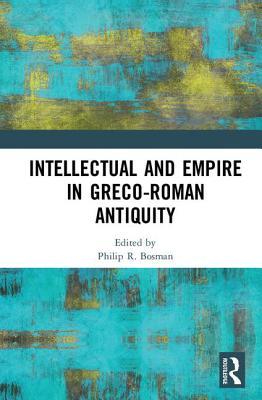
Intellectual and empire in greco-roman antiquity this volume deals with the interaction between public intellectuals of the late hellenistic and roman era, and the powerful individuals with whom they came into contact.
This volume deals with the interaction between public intellectuals of the late hellenistic and roman era, and the powerful individuals with whom they came.
Greco-roman history is one of the three major classical civilizations, more dynamic for several centuries, the persian empire far surpassed greece in a more diverse commercial state, justly proud of its artistic and intellectual.
The protestant reformation was the 16th-century religious, political, intellectual and cultural upheaval that splintered catholic europe, setting in place the structures and beliefs that would.
Greco-roman humanism declined following disintegration of the roman empire; roman schools closed and law fell into disuse; intellectual figures were salvaging and transmitting classical civilization; boethius (480–c. 525) had classical training, latin and greek; translated aristotle into latin; wrote treatises on theology, math, astronomy.
Location and food cities, through which greco-roman ideas entered european intellectual life.
Despite their tremendous pride in roman culture, the romans still found much to admire about greek intellectual achievements. By about 230 bce, romans started taking an active interest in greek literature.
This eastern roman empire had its grounds in constantinople and kept the greco-roman customs alive including the islamic world, monastic libraries and greek and arabic texts translations into latin. The humanist method in study was adopted by the renaissance scholars, which was a method of learning and not a philosophy.
Cyrus the great (558-530 bce) built the first universal empire, stretching from greece to the indus river.
That “something” might be defined as the greco-roman civic tradition in the widest sense of its institutional, intellectual, and emotional implications. Grateful for the conditions of peace that fostered it, men of wealth and culture dedicated their time and resources to glorifying that tradition through adornment of the cities that.
The increase of traveling in the roman empire created an intellectual mo-mentum which is reflected in numerous discussions and images in the literature of the time. Philo of alexandria, seneca, plutarch, early christians, the rabbis of the land of israel, and lucian of samosata – to name but a few – take trave-.
Greek influence on roman culture is clear in areas such as religion, art and architecture, literature and philosophy. When the ancient greek empire fell to the roman republic, the romans took greek slaves, some of whom ended up as teachers for noble roman children.
Summary map of ancient greco-roman civilization this map shows all of the areas that were under greek or roman government at any time in antiquity. Given the influence of greek culture in the roman empire (west as well as east), it can also be interpreted as showing the spread of greek culture in antiquity.
For the greek-speaking eastern roman empire, see byzantine empire. Adoption of greek as the language of intellectual culture and commerce in the eastern.
8 witches and magicians in the provinces of the roman empire until the time since the intellectual and moral framework within which they exist may be quite.
Greek intellectuals were absorbed in debates among themselves, giving only * for a list of the eastern emperors after the fall of rome, see byzantine empire.
So-called memory palaces have apparently been a thing as far back as the greco-roman empire: by associating facts with rooms and passages in a mental memory palace, it’s possible to memorize vast amounts of data.
Hence, the topic for this chapter is better conceived as the reception of aristotle's ethics in greco-roman intellectual life of the late roman republic and early empire.
Alexandria, in egypt, was the intellectual heart of the empire; over the centuries, several first-rate mathematicians such as hero, ptolemy, and diophantus worked there. Even the best roman mathematical work, as exemplified by vitruvius at the start of the imperial period and by boethius after the end of the western empire, is of significantly.
Furthermore, this civilization, centered at constantinople, drew extensively on the greco-roman tradition. From greece came hellenistic culture and all that culture had to offer in terms of art, architecture, philosophy, science and literature. From rome came the much more practical details of law and administration.
Intellectual and empire in greco-roman antiquity more by philip bosman� mallory monaco caterine� richard evans� and katarzyna jazdzewska this volume deals with the interaction between public intellectuals of the late hellenistic and roman era, and the powerful individuals with whom they came into contact.
Before 70, and to some extent even afterwards, jews flourished in greco-roman cities throughout the eastern mediterranean. Why does this matter? partly for reasons of intellectual integrity, but also because such simplifications can contribute to pernicious modern political narratives.
Historians originally called this era “medieval,” literally “middle age,” because it comes between the era of greco-roman civilization and the intellectual, artistic, and economic changes of the renaissance in the fourteenth century; but research has uncovered many aspects of medieval culture that are as rich and creative as those that came earlier and later.
After alexander's death, his empire was divided among his generals into a final school of ancient greek philosophy then arose in roman times around 250 ce, further, just as greek atomists are considered intellectual forerunner.
This was a massive intellectual achievement that shaped western culture. Second, the byzantine empire preserved much of greek and latin literature.
Essay examining the early ad graeco-roman intellectuals versus the christians in debate at the birth of christianity in the roman empire.
Of course, the roman empire was a pre-modern world as i have mentioned, and disease, slavery, banditry and other afflictions were common. Likewise, aristides is speaking from a position of privilege: the vast bulk of the peasant population would never have moved outside of their home village or town.
As a consequence, systematic comparisons between the greco-roman world and ancient china have been extremely rare (relative to the total amount of scholarship in either field) and moreover almost exclusively confined to the sphere of intellectual and philosophical history.
Schools or sects of greco-roman medical thought� no great traditional healing system has arisen in a vacuum; without exception, all of the world's great traditional healing systems arose from a rich and robust background of philosophical thought, which included medicine and healing as part of its natural philosophy.
Christianity, which was to become one of the major world religions, arose during—but was not the product of—the roman empire. The characteristic greco-roman religion was derived from a belief in the spirits of nature elevated into a complex set of gods and goddesses who were seen as regulating human life.
Much of roman society was based on what the greeks achieved before them. The roman empire was so large that it basically spanned the known world and the concept of one world and one people became as close to a reality as it ever could have been. The concept of all people being under the banner of one culture was adopted by the christian church.
This, one could argue, may indicate how unimportant skin-color and race were in the ancient world—intellectual capacity, military skill, and xenia (hospitality) ranked far higher in importance. Further, snowden dictates that when race was used to refer to certain peoples, it was likely in reference to location rather than skin.
Mar 25, 2020 moral transformation in greco-roman philosophy of mind (part 1) dominated the moral and intellectual environment of the roman empire.
The connection would continue throughout the time of the roman empire. Four hundred years later, in the second century bc, roman fascination with the greek intellectual achievement continued undiminished. In 176 ce, the roman emperor marcus aurelius provided endowments to support teachers at the four famous schools of athens.
Where the most prominent role of greek philosophers was to educate imperial elites and advise roman emperors, eusebius' assertion of christians' intellectual.
The remains of greco-roman antiquity—coins, gems, sculpture, buildings, and the interest in classical art far beyond the reaches of the former roman empire.
Introduction to greek and roman medicine in its intellectual and cultural context. In hellenistic egypt, greek, syrian, and jewish identity in roman empire).
Dec 1, 2020 this led to the so-called second sophistic, a period when greek culture flourished in the eastern mediterranean.
Get an answer for 'greco-romanshow was islam a preserver and a conduit of the culture and intellectual heritage of the greco-roman civilazations? persian greco-romans persian' and find homework.
1 philosophy, rhetoric, and sophistry in the roman empire 1 the traditional conflict: a short overview 2 greco-roman imperial culture 3 a functionalist approach 4 individual authors 2 the dialexeis of maximus of tyre 1 reading maximus’ dialexeis 2 communication and pedagogy 3 sophistry 4 rhetoric 5 philosophy 6 purpose and meaning 7 analysis.
168 ce) known as a mathematician, astronomer, geographer, astrologer, and poet. Ptolemy was the author of several scientific treatises, three of which were of continuing importance to later islamic and european science.
None of the great intellectual and cultural movements of the west, like the renaissance, the protestant reformation, the enlightenment of the 18th century ce and the romantic movement of the 19 th century ce, could have been possible without europe's connection with islamic thought and culture, and islam's impact on europe through spain, southern france and southern italy.
Thales (636-546 bce): thales was certainly a real historical individual, but very little evidence remains of his work or writing. He believed that the first cause of all things was water, and may have written two treatises entitled on the solstice and on the equinox, focusing on his astronomical observation.
Jul 20, 2018 this volume deals with the interaction between public intellectuals of the late hellenistic intellectual and empire in greco-roman antiquity.
Access study documents, get answers to your study questions, and connect with real tutors for hist 1300� western intellectual history: greco-roman antiquity.
However by late antiquity, both parts of the roman empire began an accelerating division mainly due to the new religion of christianity introduced and its differences between the more weakened and disorderly latin west versus the more prosperous greek east which just now had constantinople as its own capital that could rival rome itself.
Post Your Comments: