Read The Philippines Through the Centuries, Vol. I & II Combined - Antonio M. Molina file in ePub
Related searches:
Philippines The Cancer Atlas
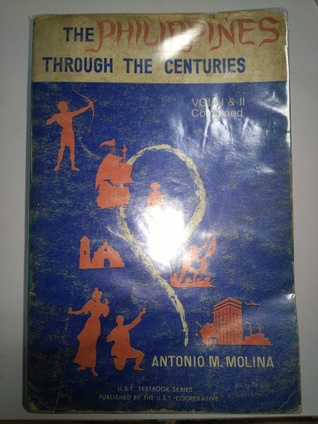
The Philippines Through the Centuries, Vol. I & II Combined
Tagaytay, The Philippines - Live and Invest Overseas
Top Things to Do in Manila, the Philippines
The Top Things to Do in Davao, Philippines
The 20th Century
10 Amazing Things to Do in Palawan, the Philippines
The Philippines; Through the Centuries: MOLINA, Antonio M
The Philippines Through the Centuries - Antonio M. Molina
The Philippines through the centuries, (U.S.T. textbook
The Philippines through the centuries, by Antonio M. Molina
The Philippines, 1898–1946 US House of Representatives
Philippines - The 19th century Britannica
Tagalog Bestsellers of the Twentieth Century: A History of the Book
A History of the Philippines - Project Gutenberg
Nineteenth-Century Philippines and the Friar-Problem - JSTOR
The Philippines through European Lenses: Late 19th Century
Population and History: The Demographic Origins of the Modern
HISTORY OF THE PHILIPPINES - HistoryWorld
History of the Philippines - Wikipedia
The Philippines: Facts and History - ThoughtCo
The Philippines Through the Centuries – Gallery of Prints
The Literary Output of the Filipinos through the Centuries: A
The philippines a century hence - powerpoint presentation
The China Trade - Philippines History - Porcelain Period
How the Philippines Became Catholic Christian History
After more than a century, did the Philippines finally break free from
The Philippines: An Overview of the Colonial Era - Association for
About the Philippines
Philippines through the Centuries - RMS & GS
Philippines lasting from the 17 th century to the 19 th
The Philippines: Culture and Tradition - Globalization
New study suggests that the Philippines is the ancestral
Spanish-American War and the Philippine-American War, 1898
History of Nursing in the Philippines - Nurseslabs
Religious Beliefs In The Philippines - WorldAtlas
Teodoro A. Agoncillo Official Gazette of the Republic of the
8 Centuries-Old Buildings in the Philippines You Can Still Visit Today
The Philippines in the Twentieth Century - W&M ScholarWorks
Christianity and Colonial Empire in the 19th Century Philippines
THE PHILIPPINES: Road to the 20th Century - TIME
The Phillippine Islands. Maritime History and World Seaports during
Occupy Pilipinas: History Stories Lost in the Cracks of Centuries
The Philippines, 1898–1946 US House of Representatives: History
Analysis of 21st Century Skills Integration as applied in the
Introduction on the Filipino Culture
Geography and Fact Sheet About the Philippines
A Golden Discovery in the Philippines Asia Society
The Rarely Told Story of Pre-Colonial Philippines Ancient
15 Top-Rated Tourist Attractions & Things to Do in the
The Age ofDiscovery: Impact on Philippine Culture and Society
Religion in the Philippines Asia Society
Jesuits in the Philippines Philippine Jesuits
The Spaniards as Colonial Masters in the Philippines
Foresighting the Philippine future Inquirer Opinion
The Philippines Under the Frailocracy Scribbling Blues
Architecture of the Philippines
The Philippines through European Lenses – Late 19th-Century
The Former Philippines thru Foreign Eyes - Part VI (by Fedor
The Culture Of The Philippines - WorldAtlas
The History of the Filipino Languages
Filipino Immigrants in the United States migrationpolicy.org
The long history of racism against Asian Americans in the U.S
[OPINION] Appreciating the Filipino identity through our
The Philippines a century hence : Rizal, José, 1861-1896
Philippines - The Friarocracy
Baroque Churches of the Philippines - UNESCO World Heritage
Philippine Literature in the Spanish Colonial Period with
Christianity turns 500 in the Philippines
Culture of The Philippines - history, people, clothing
Philippine Culture Uniquely Distinct From the Rest of the World
Is the Philippines really independent?
How and why did the United States take control of the
Major Languages of the Philippines
The Education System in Philippines
Spain reigned over the philippines for 333 years, from 1565 to 1898. Since spain was far from the country, the spanish king ruled the islands through the viceroy of mexico, which was then another spanish colony. When mexico regained its freedom in 1821, the spanish king ruled the philippines through a governor general.
The philippines, a large island archipelago situated off southeast asia, was colonized by the spanish in the latter part of the 16th century.
Islam is the third-largest religion in the philippines after catholicism and christianity. The religion existed in the region for around a century before the spread of christianity. Islam first spread to simunul island in the philippines through foreign trade with countries such as india.
Century and exploded in the insurrection of 1896, which itself blazed up to become the 1898 revolution. Aside from american interest in the matters concerning the nine-teenth-century conditions of the philippines and the friar-problem, there is a logical connection which gives a good reason for studying both at the same time.
Muslim traders from the malay archipelago reached the philippines in the 14th century, well ahead of the europeans. Thier conversion of the populace was a modest affair; they were more interested in commerce than colonization, although they did establish strongholds and convert the local populace to islam.
Hiraya gallery in cooperation with the gallery of prints presents its first sales exhibition of prints from the 16h century.
Abstract: an econometric “verification” of historical accounts of philippine international trade and economic liberalization during the 19th century using.
The turn of the century witnessed not only the philippine revolution but a quieter though no less significant outbreak. The educated women of the period produced significant poetry. Gregoria de jesus, wife of andres bonifacio, wrote notable tagalog poetry.
This article analyses the changing significance of racial theories in the writings of spanish emigrants in the late nineteenth century philippines.
From the beginning of the war to 1900, some 80,000 men passed through the post on their way to the philippines. At the turn of the century, san francisco offered many attractions, but army life at the presidio was cramped, and sickness often flared up in the temporary tent camps.
Franken- stein and rowlands (1978) suggested that iron age chiefs ensured exclusive ac- cess to mediterranean imports by locating their political and economic.
See all formats and editions hide other formats and editions. Book recommendations, author interviews, editors' picks, and more.
This statement must have been self-evident over the years, decades, and centuries past. Far from being a ‘dull and boring’ subject, its depth excitingly connects things through time and encourages starters to take a long view of such connections for a better understanding of their chosen path.
Philippines lasting from the 17 th century to the 19 th century. There is justification in the use of thomism in the exploration of filipino virtue ethics because it is a historical “insider” so to speak.
The philippines were ruled by western powers - first the spanish and later the united states, for some 350 years. Except for a few religious minorities, the philippines has also become thoroughly christianized and boasts of being the only country in southeast asia with a christian majority.
1916 - us government promises philippines greater autonomy, leading to independence. 1935 - a plebiscite approves establishment of commonwealth of philippines.
In the early 16th century, the philippines began receiving visitors who would have far more long-lasting consequences. Portuguese explorer ferdinand magellan landed at samar at dawn on 16 march 1521. He claimed the islands for spain and named them the islas del poniente (western islands). Soon after, the portuguese arrived from the east and declared the islands to be the islas del oriente (eastern islands).
Major languages of the philippines major languages of philippines is from another website the philippines has 8 major dialects. Listed in the figure from top to bottom: bikol, cebuano, hiligaynon (ilonggo), ilocano, kapampangan, pangasinan, tagalog, and waray. The language being taught all over the philippines is tagalog and english.
Evidence shows that an educated and wealthy seafaring civilization existed in the philippines centuries before explorer ferdinand magellan arrived in 1521 and kicked off the spanish colonial period. However, it was on that construction site on the southern island of mindanao in 1981 that the most valuable butuan cache would be found, bringing.
“the philippines constitutes a portion of the large archipelago once known as the east indies.
A testament to this maritime orientation is encapsulated in an 8th-century bc burial jar with a spirit.
In the 14th century, arabs arrived, introducing islam in the south and extending some influence even into luzon. The malays, however, remained the dominant group until the spanish arrived in the 16th century. Ferdinand magellan claimed the philippines for spain in 1521, and for the next 377 years, the islands were under spanish.
By the 19th century anglo american merchant houses dominated the burgeoning export economy.
The philippines was the second-largest origin country for immigrants in 1990 and throughout the first decade of the 21st century but was overtaken by india and china in 2010. Today, filipino immigrants represent the fourth-largest origin group after the foreign born from mexico, india, and china.
Manila has a collection of cultural riches via architecture, shopping and cuisine. Don't miss out on manila's museums, parks and bars updated 06/26/19 the philippines’ capital mani.
Spanish conquistadors reached the islands of the philippines in 1521. They named the country after king philip ii of spain in 1543, pressing to colonize the archipelago despite such setbacks as the 1521 death of ferdinand magellan, killed in battle by lapu-lapu's troops on mactan island. From 1565 to 1821, the viceroyalty of new spain ruled the philippines from mexico city.
The philippines is a country that has varied cultural influences. Most of these influences are results of previous colonization, deriving mainly from the culture of spain and the united states. Despite all of these influences, the old asian culture of filipinos has been retained and are clearly seen in their way of life, beliefs and customs.
The islam religion was brought to the philippines in the 14 th century (bautista). It was spread throughout mindanao and also reached into manila and tondo before the spaniards came to the philippines and stopped its spread. This spread could have also contributed new words and concepts to the existing languages.
Manila is an exciting and vibrant city that is a thriving metropolis surrounded by centuries-old churches and colonial history. It is easy to walk around manila on your own, or take a guided sightseeing tour of the oldest district, the intramuros or walled city, where you'll find some of the most significant tourist attractions and important landmarks and monuments.
29 sep 2020 long before the spaniards came to the philippines, trade among the most common and acceptable form of money through many centuries.
Photographs of the philippines during the nineteenth century have increasingly become accessible to the public through exhibits and publications. Meerkamp van embden, a dutch businessman who later served as honorary consul of the netherlands from 1889 to 1927.
Flipping philippines should be the next awesome name for philippines and culture! i had a lecture to write and speech in front of hundreds and fifty hundreds of students, facilities, and worker. This philippines article wrote and helped my paper more than any other website and is the best for great information about philippines and go filipino!.
When the united states took over the philippines in the first half of the century, the justifications for colonizing were to christianize and democratize. The feeling was that these goals could be achieved only through mass education (up until then education was reserved for a small elite).
Historically a trading hub, the philippines was one of the earliest global trade and maritime routes in the pacific through the galleon trade in the 15th century. One of the philippines' greatest asset is its people known for their warm hospitality and cheerful attitude, making them among the happiest people on earth (gallup positive experience index, 2015) as a nation of vastly young population, the philippines is entering a demographic sweet spot with working age filipinos expected to rise.
During the spanish-american war, filipino rebels led by emilio aguinaldo proclaim asia, was colonized by the spanish in the latter part of the 16th century.
1521 - ferdinand magellan discovers the islands and names them: archipelago of san lazaro. 1542 - spanish expedition commandeered by ruy lopez de villalobos claims the islands for spain; names them philippines after prince philip, later king philip ii of spain; the philippines becomes part of spanish empire.
Early history: the philippine archipelago was settled at least 30,000 years ago, when migrations from the indonesian archipelago and elsewhere are believed to have occurred. Over time, social and political organization developed and evolved in the widely scattered islands.
On a malayan base, chinese, hindu, spanish and american ingredients have been added through centuries of foreign influence and surprisingly, a blend with a distinctiveness of its own has emerged.
The city of tagaytay is one of the most popular tourist destinations in the philippines and it’s attracted quite a few retirees as well. Get your free overseas information report today! learn more about the philippines and.
Free trade was introduced during the 19th century which brought wealth to the population. Evidence of spanish rule can be seen across the philippines, particularly in the plentiful baroque churches and the walled intramuros district of manila.
Nagcarlan things to do nagcarlan is a city in the philippines, southeast of manila. Here, tourists can hike through lush forests, sample the local be the first to discover secret destinations, travel hacks, and more.
In the philippines, history is considered by the great majority of students and a british historian of the nineteenth century once said that history was past politics.
The annexation to the us is believed to save the philippines from disasters such as graft and corruption. May 8, 1972 - congressman joaquin roces moves for a congressional inquiry on the movement. May 14, 1972 - the statehood philippines movement registers as an official political party.
History of the philippines� people first reached the philippines about 30,000 years ago, when the first people immigrated from sumatra and borneo via boats or land-bridges. More recent immigrants include chinese beginning in the ninth century ce and spanish conquistadors in the sixteenth.
Davao city is one of the philippines youngest metropolises – but it’s making up for lost time with a growing list of cultural and natural adventures endless activities from the islands to the highlands updated 06/26/19 cavan city/getty imag.
Educators go through a rigorous application process, and every answer they submit is reviewed by our in-house editorial team.
When the legazpi expedition reached the philippines in 1565, the augustinian missionaries also began to make its presence. Other religious orders followed such as the franciscans (1577), jesuits (1581), dominicans (1587), recollects (1606) and the benedictines (1895).
Please see wikipedia's template documentation for further citation fields that may be required.
B) christianity entered the philippines through the ministry of representatives from the russian orthodox church. C) a secondary hearth for christianity arose in the philippines in the twelfth century, and since that time christianity has remained the dominant religion in the philippines.
Over the centuries, indo-malay migrants were joined by chinese traders. A major development in the early period was the introduction of islam to the philippines by traders and proselytizers from the indonesian islands.
For the first half of the 20th century, the philippines had been the far edge of the united states’ overseas empire, the physical limit of america’s frontier. Throughout this period, the united states tried to keep the people of the philippines at arm’s length while controlling the political and economic affairs of the islands.
Furthermore, the changes during the marcos years were clarified by using. Frank's analysis of the global economic crises that affect development in third world.
The filipino culture is an exuberant story that tells of the nation's journey through the centuries. Customs reflect the people's faith, their oneness with others, their affinity with nature, and their celebration of life.
During their sixteenth-century expansion into the east, ferdinand magellan and other explorers bearing the spanish flag encountered several uncharted territories.
During the late eighteenth century, revolutionaries such as gabriela and diego silang fought for a free ilocano nation in the northern philippines. Other revolutionaries emerged, and by the end of the nineteenth century, leaders such as andrés bonifacio and emilio jacinto were pressuring spanish leadership on several fronts.
21 jan 2020 a few centuries before the spanish reached the philippines in the 16th yet after the defeat of spain in the war over cuba, the philippines.
The cultural diversity in the philippines is showcased in numerous festivals, locally known as fiestas, which are celebrated in the country. All of the festivals have religious or cultural significance. Due to the predominance of the roman catholic faith, most cities and towns in the philippines have patron saints who are honored through festivals.
The power of religious orders remained one of the great constants, over the centuries, of spanish colonial rule. Even in the late nineteenth century, the friars of the augustinian, dominican, and franciscan orders conducted many of the executive and control functions of government on the local level.
Initially, the core of the collection consisted of items previously owned by the on the nineteenth-century relationship between spain and the philippines.
By the late 18th century, political and economic changes in europe were finally beginning to affect spain and, thus, the philippines. Important as a stimulus to trade was the gradual elimination of the monopoly enjoyed by the galleon to acapulco. The last galleon arrived in manila in 1815, and by the mid-1830s manila was open to foreign merchants almost without restriction.
11 mar 2020 built in 1724 by the franciscans, the church did not escape the fury of mayon, except for this tower and its facade that collapsed over the years.
Lung cancer remains the most commonly diagnosed cancer and the leading cause of cancer death worldwide because of inadequate tobacco control policies.
The baroque churches of the philippines is a serial inscription consisting of four roman catholic churches constructed between the 16thand the18th centuries in the spanish period of the philippines. They are located in separate areas of the philippine archipelago, two at the northern island of luzon, one at the heart of intramuros, manila, and the other in the central visayas island of iloilo.
Education in the philippines: structure education in the philippines is offered through formal and non-formal systems. Formal education typically spans 14 years and is structured in a 6+4+4 system: 6 years of primary school education, 4 years of secondary school education, and 4 years of higher education, leading to a bachelor’s degree.
What is it about the philippines that makes it different from the rest of the world? well, for one thing, it is all about their culture. Here are 11 things you should know about filipino culture that sets them apart from any other nation on the planet.
Throughout the nineteenth century, the philippines was, in demographic terms, both an anomaly and a paradox.
Blackwood’s magazine for august, 1818, has an account of conditions in manila and the philippines from data given by an english merchant who left the islands in 1798 after twenty years’ residence in which he accumulated a fortune.
The philippines in brief destination philippines, a nations online country profile of the archipelago in maritime southeast asia. The island nation is situated south of taiwan, between the south china sea in the west and the pacific ocean in the east.
Spain introduced christianity to the philippines in 1565 with the arrival of miguel lopez de legaspi. Earlier, beginning in 1350, islam had been spreading northward from indonesia into the philippine archipelago. By the time the spanish arrived in the 16th century, islam was firmly established on mindanao and sulu and had outposts on cebu and luzon.
16 jan 2021 lio mangubat breathes life into the lost histories of the philippines through occupy pilipinas, a podcast about history.
7 apr 2009 in blanco's blog entry below, he talks about how his book examines the history of the philippines and how the country was effected by imperialism.
Century there are approximately 2,000 persons (about 400 of them are priests) and in the 19th. ----- 1565 march 27: miguel lópez begins to conquer the philippines.
Philippines culture reflects the complexity of the history of the philippines through the combination of cultures of foreign influences. Spanish colonization of the philippines lasted for more than three centuries. There is a significant amount of spanish-mexican influence within filipino culture, customs and traditions.
Philippines facts and figures provide information on population, inflation rate, seasons, taxes, economics, government, residency and more. Get your free overseas information report today! learn more about the philippines a.
The sultanates of lanao in mindanao, philippines were founded in the 16th century through the influence of shariff kabungsuan, who was enthroned as first sultan of maguindanao in 1520. Islam was introduced to the area by muslim missionaries and traders from the middle east, indian and malay regions who propagated islam to sulu and maguindanao.
Let us celebrate and emulate how he boldly wrote his four-part essay, “filipinas dentro de cien años” (the philippines a century hence), in the magazine la solidaridad. It was a single individual foresighting the interplay of large global forces on a philippines then on the verge of making its own destiny.
Only 35 miles from manila, the philippine barrio (village) of santo nino is a town for centuries its only access to the outside world has been a winding trail over.
Over the centuries, filipinos internalized catholicism because church rituals related to their practical concerns. Indigenous religious practices were largely about livelihood, prosperity, healing.
It was not until the end of the 19th century that filipinos regained their freedom, following more than 200 rebellions in several parts of the country, which culminated in the successful philippine revolution of 1896. The filipinosproclaimedthefirstindependentrepublic in asia on june 12, 1898.
Philippines was governed as a territory of the viceroyalty of new spain. 1567: dagami revolt (1567) 1568: the portuguese, under the command of general gonzalo de pereira, attack cebu and blockade its port. 1569 present-day capiz province becomes a spanish settlement.
Sadly, due to the lack of resources, most high schools only delve on 4 of philippines’ major literary works. When a filipino who grows up in our education system only knows ibong adarna.
Post Your Comments: