Read Asset Allocation and Private Markets: A Guide to Investing with Private Equity, Private Debt and Private Real Assets - Cyril Demaria | ePub
Related searches:
Asset Allocation and Private Markets: A Guide to Investing with
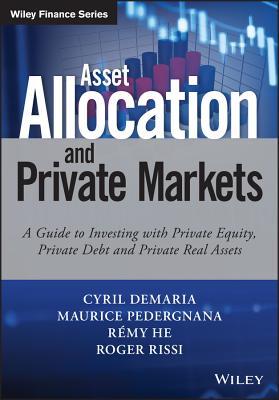
Asset Allocation and Private Markets: A Guide to Investing with Private Equity, Private Debt and Private Real Assets
Asset Allocation and Private Markets. A Guide to Investing with
Asset Allocation and Private Markets: A Guide to - Amazon.com
Asset Allocation and Private Market Investing The Journal of
(PDF) Asset allocation and private markets: the need for a cash
Asset Allocation with Private Equity (Digest Summary) - CFA Institute
Amazon.com: Asset Allocation and Private Markets: A Guide to
Asset Allocation and Private Markets: A Guide to - Amazon UK
The challenges of private markets: a discussion with Professor Josh
Strategic Portfolio Construction with Private Equity AllAboutAlpha
Asset Allocation and Private Markets : A Guide to - Books Kinokuniya
Asset Allocation and Private Markets: A Guide to - Amazon.de
Asset Allocation and Private Markets Bookshare
Beginners’ Guide to Asset Allocation, Diversification, and
Asset Allocation with Private Equity - Commonfund
Asset Class - Overview and Different Types of Asset Classes
A concise guide to asset allocation asset allocation refers to the investment strategy of balancing risk and reward by determining what percentage of your portfolio or net worth to put into various asset classes. For most investors, a smart approach to asset allocation is a lot more important than individual stock selection.
Asset allocation and private markets provides institutional investors, such as pension funds, insurance groups and family offices, with a single-volume authoritative.
Asset allocation is the process of dividing the money in your investment portfolio among stocks, bonds and cash. The goal is to align your asset allocation with your tolerance for risk and time.
Asset allocation and private markets: a guide to investing with private equity, private debt, and private real assets (wiley finance editions) demaria, cyril,.
We highlight key investment issues and illustrate a range of hypothetical asset allocations for the management of committed capital during the drawdown period�.
Asset allocation and private markets: a guide to investing with private equity, private debt and private real assets (wiley finance) hardcover – march 1, 2021 by cyril demaria (author), maurice pedergnana (author), r¿my he (author),.
Private assets such as private equity and venture capital have long been a thorn in the side of asset allocators and chief investment officers. Their lack of liquidity makes it hard to model their return streams as an input to an asset allocation model, risk budget, or optimization function.
Q: what are the best practices for building a private markets investment capability q: we'd also like to talk about private markets investments in a total portfolio.
Investors have been increasing their allocations to private assets, seeking higher returns and better portfolio diversification. However, as this allocation increases, the liquidity characteristics of their portfolios change. The authors create a framework that links bottom-up private asset investing with top-down asset allocation.
Integrating private markets within an asset allocation can be rewarding but is also challenging. Beyond setting harmonised measures of risk and return, investors.
4 feb 2021 investors have been increasing their allocations to private assets, seeking higher returns and better portfolio diversification.
The comprehensive guide to private market asset allocation asset allocation and private markets provides institutional investors, such as pension funds,.
24 apr 2020 pdf a key issue all investors must deal with in order to efficiently allocate their assets to private markets is the difficulty to reach and maintain.
2 going forward, private market assets are expected to an essential and core part of their overall asset allocation.
Synopsis the comprehensive guide to private market asset allocation asset allocation and private markets provides institutional investors, such as pension funds, insurance groups and family offices, with a single-volume authoritative resource on including private markets in strategic asset allocation.
The practice of reducing investment portfolio risk by diversifying your investments across different asset classes is referred to as asset allocation. Asset allocation and risk tolerance the other reason to have a basic understanding of asset classes is just to help you recognize the nature of various investments that you may choose to trade.
The comprehensive guide to private market asset allocation asset allocation and private markets provides institutional investors, such as pension funds, insurance groups and family offices, with a single-volume authoritative resource on including private markets in strategic asset allocation.
Contrary to what happens while investing in publicly traded asset classes, private markets funds periodically call just a portion of the allocated capital as well as they periodically distribute.
Asset allocation and private markets is a 286-page hardback covering the world of private markets, also known as unquoted investments, or the intrigue-inducing term ‘alternative assets’. The private markets are particularly difficult to navigate, due to the lack of transparency surrounding private transactions.
Asset allocation and private markets� a guide to investing with private equity, private debt and private real assets (wiley finance).
16 dec 2020 real assets are a portfolio diversifier and volatility dampener. Given their long- term nature, investors should not rush tactically into these assets.
Post Your Comments: