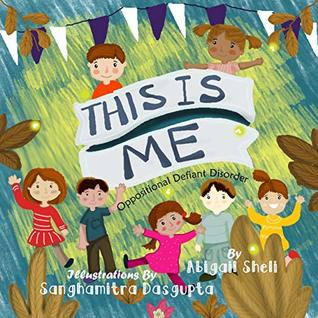
Download This is Me - (Oppositional Defiant Disorder): O.D.D. Illustrated by Sanghamitra Dasgupta - Abigail Shelley | PDF
Related searches:
Expert help for children with difficult, oppositional, conduct and difficult behaviour problems, including oppositional defiance and conduct disorder.
In children with oppositional defiant disorder (odd), there is an ongoing pattern of uncooperative, defiant, and hostile behavior toward authority figures that.
Cross creek hospital, in austin, is the preferred oppositional defiant disorder ( odd) treatment center for adolescents, adults and seniors in texas; offering.
But often, oppositional defiant disorder more oftenly occurs in conjunction with another behavior disorder such as attention deficit hyperactivity disorder or adhd, or autism spectrum disorder. So often, parents are having to manage those other issues associated with adhd or autism, as well.
Oppositional defiant disorder (odd) is a disruptive behavior disorder in children and teenagers characterized by patterns of unruly and argumentative behavior and hostile attitudes toward.
Kids with oppositional and defiant personalities are the most determined individuals you’ll ever meet. Some kids follow rather than lead, quickly complying with rules and traditions. Others “go with the flow,” rarely making waves for fear of disappointing others or possibly failing.
Owen was given a diagnosis of oppositional defiant disorder (odd), and recommendations included parenting coaching and prescription medications. Owen had tried a series of drugs including but not limited to: dextroamphetamine (central nervous system, or cns, stimulant), lisdexamfetamine (another cns stimulant), clonidine (an alpha-adrenergic.
Oppositional defiant disorder (odd) is defined by therapists as a cluster of behaviors that include many or all of the following characteristics: accusatory.
Oppositional defiant disorder (odd) is a behavioral condition, usually diagnosed in childhood, which consists of strongly embedded patterns of negative reactions to authority, willful noncompliance, irritable mood, and negative attention-seeking behaviors. 1 there are 2 primary symptom categories used to diagnose odd, externalizing behavior problems and negative emotions.
Oppositional defiant disorder (odd) is a behavioral disorder characterized by being defiant at all times. Moreover, the child struggles to pay attention, control impulses, listen or even get along with other children as well as adults because of being argumentative, disobedient, and war freak. These problems may interfere with their education as well as their social life.
Dec 19, 2013 - product provides introduction to oppositional defiant disorder, one of the most difficult behavior to manage in a school setting.
Oppositional defiant disorder (odd) is associated with signs of yelling, crying and eye rolling.
15 apr 2020 nothing prepared me for my daughter's explosive rages and vindicative behaviour.
However, i have come to realize that the diagnosis of oppositional defiant disorder (odd) is one of the most difficult to assess and treat due how the child’s personality and environment contribute to their behaviors. So, let’s shed some light on this diagnosis and what it means for your parenting.
The oppositional defiant disorder is thought to be caused by a combination of social, mental, and biological factors. Oppositional defiant disorder is susceptible to exposure to families with adhd or mood disorders such as depression or bipolar disorder. The etiology of oppositional defiant disorder is unknown, but it is probably more common in children from families in which adults produce a model of conflicts and controversial interpersonal relationships.
Yes i’m defiant, i feel it is my ethical duty to reject social constraints that are clearly oppressive. These behaviors and attitudes will persist so long as the situation calls for them. Consider a criterion met only if the behavior occurs more frequently than is typically observed in individuals of comparable age and developmental level.
Oppositional defiant disorder (odd) is a type of behavior disorder. Children with odd are uncooperative, defiant, and hostile toward peers, parents, teachers, and other authority figures. They are more troubling to others than they are to themselves.
Oppositional defiant disorder oppositional defiant disorder is common disorder affecting children. It is characterized by defiant, negative, hostile and disobedient behavior towards authority figures and parents. The disorder can be easily diagnosed when symptoms have been present for at least six months.
And sometimes oppositional, defiant behavior can actually become a habit. For example, a child is anxious or worried, refuses to do something when asked, starts arguing with a parent, and over time, gets used to dealing with stress or limits in a way that is oppositional.
Oppositional defiant disorder (odd) is clinically described as a condition in which a child displays an ongoing pattern of an angry or irritable mood, defiant or argumentative behavior, and vindictiveness toward people in authority. One can easily mistake odd as mere rebellion or a child's attempt to garner attention.
Symptoms of oppositional defiant disorder (odd) include regular temper tantrums, excessive arguments with adults, and uncooperative, deliberately annoying, or mean and spiteful behavior. If you recognize these extreme symptoms in your child, consider seeking an odd diagnosis and behavioral parent training.
All children are oppositional from time to time, particularly when tired, hungry, stressed, or upset. They may argue, talk back, disobey, and defy parents, teachers, and other adults. Oppositional behavior is a normal part of development for two to three year olds and early adolescents. However, openly uncooperative and hostile behavior becomes a serious concern when it is so frequent and consistent that it stands out when.
Diagnosing oppositional defiant disorder in african american males� according to the diagnostic and statistical manual of mental disorders, fifth edition (dsm-5; american psychiatric association [apa], 2013), odd is characterized by a pattern of behavior that includes angry and irritable mood, argumentative and defiant behavior, and/or vindictiveness. Symptoms must cause significant problems at home, school or work; must occur with at least one individual who is not a sibling; and must.
Instead, thinking and behavior remain stuck in the pre-verbal, autonomic reactions in the lower parts of the brain. It is easy to see a presenting behavior and think one thing is happening, when it is another thing altogether.
To not include a criticism section is laughable reminds me of the way the scientologists always try and repress criticism of their equally cuckoo philosophy. Levine, argue that oppositional defiant disorder is an abuse of psychiatry.
You shouldn’t have to be responsible for an adult son who is no longer considered conduct disordered but still acts like a juvenile. You have every right to demand conformity to your standards and if he refuses to comply with the house rules, show.
Oppositional defiant disorder (odd) is more than when a child misbehaves or is ' naughty'. Odd requires a persistent pattern of defiant behaviour that is present.
I know you do not diagnose, but just wondering what you think.
Frequently, odd is confused with adhd, and sometimes children may well be displaying both odd and adhd. Oppositional defiant disorder usually involves an enduring pattern of un-cooperative and hostile behaviour. Authority, rules and regulations are a huge trigger to these behavioural traits. The diagnosis for oppositional defiant disorder is usually given when a child is seen to have many of the following reactions to family members.
Oppositional defiant disorder (odd) oppositional defiant disorder (odd) characterised by a series of negative and disruptive behaviours, as well as dissocial or aggressive acts which usually involve people in authority, the condition is particularly common in children with attention deficit hyperactivity disorder (adhd).
Nobody likes the word no, especially children and adolescents with severe defiance issues, oppositional defiant disorder or conduct disorder.
But of course, it must be done—so i tiptoe into his room and sit down.
My 9yr old daughter exhibits oppositional defiant characteristics. We are newly in counseling with a professional to help with this. In the past the doctors have treated her as adhd and i know sometimes these two things go together.
A child whose angry outbursts and aggressive behavior makes life difficult may have oppositional defiant disorder (odd); it affects 16 percent of teens.
Children with odd often have other mental health and behavioural problems, particularly adhd.
Objectives: executive functioning and emotion recognition may be impaired in disruptive youth, yet findings in oppositional defiant disorder (odd) and conduct.
The dsm informs us that the essential feature of oppositional defiant disorder is a recurrent pattern of negativistic, defiant, disobedient, and hostile behavior towards authority figures that persists for at least 6 months. Unbelievable as this orwellian, big brother text is - it gets worse.
Oppositional defiant disorder (odd) is a disorder where a child shows a constant display of negativity, defiance, disobedience and downright violence towards their parents, teachers, or any other authority figure. When a child has odd, they will often be persistently stubborn; resisting any request or directive made by an adult.
Oppositional defiant disorder (odd) is a serious and diagnosable condition that affects as many as 16% of school age children and adolescents. It is categorized by a chronic disobedience and/or aggressive and defiant behavior shown primarily towards parental or authority figures, such as relatives, teachers, law enforcement officers, doctors.
Oppositional–defiant disorder display deviant attentional processing in-dependent of adhd symptoms.
Defiant angry boy with oppositional defiant disorder (odd) and adhd every parent of a defiant child with attention deficit hyperactivity disorder (adhd or add) knows what it’s like to deal with severe adhd behavior problems — sometimes even the most well-behaved child lashes out, or refuses to comply with even the most benign request.
Find helpful customer reviews and review ratings for oppositional defiant disorder: the best behaviour management strategies for children with cases of odd that could lead to psychopathy - stop temper tantrums before they start! at amazon.
Oppositional defiant disorder (odd) in adults might appear as an anger problem. Typical signs are severe negativity, drug and alcohol use, fighting, self-destructive behavior and engaging in criminal acts such as shoplifting. Although oppositional defiant disorder is primarily a diagnosis in children, symptoms can persist past childhood.
Oppositional defiant disorder (odd) is what you call it when your child argues just for argument’s sake, not just a few times a day, but consistently, in every case. You say that the sun sets in the west and he says, “no it doesn’t. And he does this all day, every day, from the moment he is awake until the moment he’s asleep.
Oppositional defiant disorder (odd) occurs in children, and affects six to 10% of all children. It can be challenging to parent a child with odd, as it may feel like there’s a constant power struggle and you just can’t seem to get along.
Oppositional defiant disorder (odd) causes a child to defy authority and not follow rules.
There are strong-willed kids who were just born that way, others who may be reacting to a short-term traumatic event, and kids who might be formally diagnosed as having a more extreme condition called oppositional defiant disorder (odd).
Oppositional defiant disorder or odd is one of the many diagnoses under the umbrella of autism spectrum disorders. This disorder manifests itself as a pattern of angry, irritable, defiant, nonaggressive yet vindictive behavior. Teens especially tend to refuse to comply with rules and restrictions.
Oppositional defiant disorder describes a pattern of angry/irritable mood, argumentative/defiant behavior, and/or spitefulness that lasts at least six months, is present in multiple settings and occurs almost daily in children younger than 5, and at least once a week in older children.
Exceptional oppositional defiant disorder treatment program for adolescents and teens.
Oppositional defiant disorder (odd) is a disruptive disorder that causes children to misbehave in specific ways. While all kids can act up from time to time, children and adolescents with odd consistently talk back, ignore rules and seek revenge. Parents and caregivers often struggle with how to handle this extreme form of negative behavior.
We only get oppositional, defiant, or controlling when we are not feeling safe. And because in every unfolding moment we are all responding to the reality that is created by our minds based on what’s actually happening in the here and now and based on everything that has happened in the past, we must trust that our child is responding to their own reality of safe or not-safe.
They may argue, talk back, disobey, and defy parents, teachers, and other adults. Oppositional behavior is often a normal part of development for two to three year.
I highly recommend using these worksheets for behavior therapy for oppositional defiant disorder so that you can understand exactly what your child is dealing with. Pdf the effect of methylphenidate on oppositional defiant disorder from therapy worksheets for oppositional defiant disorder� source:researchgate.
Odd is one of the most common mental health disorders found in adolescents and teenagers. Research suggests that as many as 16% of adolescents have some.
12 feb 2021 oppositional defiant disorder (odd) is more than bad behaviour. Children with odd can't cooperate and need professional help to manage.
If your child is defiant to a degree that affects their life functions, this is what’s happening in their brain. The pink color of this curving central region indicates intense electrical activity. This is the brain scan of a 13-year-old boy with severe oppositional defiant disorder (odd).
Odd is a behavioral disorder that results in defiance and anger against authority.
Odd or oppositional defiant disorder might be a term you’re not so familiar with. A quick google search defines odd as: an ongoing pattern of behavior that is characterized by anger, irritability, as well as argumentative and defiant behavior towards those in authoritative positions.
For oppositional defiant disorder children being out of control is the worst thing that can happen to them because they don’t feel safe. Most of us learn at an early age, around 3 or 4, that while “no” is disappointing because it means you don’t get want you want, that no is okay and they learn to adapt.
Oppositional defiant disorder is a commonly diagnosed mental disorder in school-aged children, occurring in between 2% to 16% of the population, according to the dsm-iv-tr (american psychiatric association [dsm-iv-tr], 2000), though actual prevalence rates may be much lower, as will be discussed below.
Oppositional defiant disorder (odd) is a troublesome pattern of defiant, disobedient and hostile behavior in kids and teenagers, toward authority figures that continues for a period of at least six months. The base prevalence rate for odd is somewhere between 1 and 16 percent, yet surveys from non-clinical samples range between 6 and10 percent.
16 sep 2019 although it can affect adults, oppositional defiant disorder (odd) is most often diagnosed in children.
Oppositional defiant disorder is stigmatized an odd diagnosis carries negative social weight and judgment within and beyond the mental health fields. African american males are particularly vulnerable to diagnostic stigmatization due to multiple marginalizations that can occur when intersecting with other forms of oppression, such as racism.
Adults with a diagnosable oppositional defiant disorder (odd), are mad (angry and resentful) at the world, they tend to be aggressive and may lose their temper easily and often.
The diagnostic and statistical manual, fourth edition, (dsm iv) of the american psychiatric association defines oppositional defiant disorder (odd) as a recurrent pattern of negativistic, defiant, disobedient, and hostile behavior toward authority figures that persists for at least 6 months. Behaviors included in the definition include the following: losing one’s temper; arguing with adults; actively defying requests; refusing to follow rules; deliberately annoying other people; blaming.
Oppositional defiant disorder oppositional defiance education.
These words are part of the description of a pattern of behavior called oppositional defiant disorder. The term is used by mental health professionals, like psychologists or psychiatrists.
“oppositional defiant disorder” originally appeared on songs for mahmud (cd, 2004) and later on the live cd, the commons (2007). One of the members of the ever reviled records collective was essentially taken as a teenager from vermont and transported to some kind of institution in utah, where he was held and drugged on the premise that he had oppositional defiant disorder.
Oppositional defiant disorder (odd) is a mental disorder appearing in the children represented by a continuous pattern of irritability, anger, arguing, defiance, or vindictiveness towards any authority or administrative figure. It may happen even in best-behaved children who maybe sometimes challenging and difficult to manage.
Oppositional defiant disorder is one of the most commonly diagnosed behavioral disorders in children and adolescents.
Oppositional defiant disorder in children is a type of disruptive behavior disorder (dbd). A child has odd when their emotions and thoughts are out of balance, causing the child to vigorously defy and not cooperate, for an extended period of time.
20 aug 2015 life lessons from parenting a child with odd behavior. My son's out-of-control, unpredictable behavior caused my husband and me to re-examine.
9 oct 2020 oppositional defiant disorder stories of family survival can help parents of children with odd cope.
Read about the symptoms of odd and how treatment can improve the parent- child relationship and improve a child's behavior.
Oppositional defiant disorder, “odd”, is a childhood behavioral disorder characterized by extreme defiance, opposition to adult authority, including angry mood, easily irritable, argumentative behavior, often vindictive- does things purposefully to annoy others or get back at others, refuses to comply with directions, blames other people for their own mistakes.
Oppositional defiant disorder in the dsm-5 oppositional defiant disorder (odd) is typically diagnosed by the early elementary school years. In the diagnostic and statistical manual of mental disorders (dsm-5), diagnosis requires at least six months of symptoms resulting in impaired functioning and/or distress for either the individual or those around them.
Inability to control temper; frequent arguing with adults; refusing to do what adults ask; refusing to follow the rules; annoying other people on purpose; blaming.
Opositional defiant disorder (odd) is a diagnosis described by the diagnostic and statistical manual of mental disorders (dsm) as an ongoing pattern of anger guided disobedience, hostilely defiant behavior toward authority figures which goes beyond the bounds of normal childhood behavior.
An adult with oppositional defiant disorder (odd) may feel mad at the world, and lose his temper regularly — even daily. It may cause tension with authority figures, and trouble at work. Here is what you need to know about oppositional defiant disorder and its overlap with adhd.
Post Your Comments: