Read Mirror Affect: Seeing Self, Observing Others in Contemporary Art - Cristina Albu | PDF
Related searches:
The likeness of an object carried and formed by light in a mirror is called an image. We also see reflections of other objects that are in front of the mirror.
Using daycare mirrors is a developmental tool for infant and toddler caregivers to teach vocabulary, self-awareness, and motor skills. Learn the reasons to use infant and toddler mirrors from the research on the mirror stage by jacques lacan, activities/play with the mirrors, and safety precautions when choosing the mirrors.
Mirrored-self misidentification is the delusional belief that one's reflection in the mirror is another person – typically a younger or second version of one's self, a stranger, or a relative. This delusion occurs most frequently in patients with dementia and an affected patient maintains the ability to recognize others' reflections in the mirror. It is caused by right hemisphere cranial dysfunction that results from traumatic brain injury, stroke, or general neurological illness.
Older infant (6 to 18 months) – smiles at own reflection in mirror or makes sounds when looking at image in the mirror. Toddler (15 to 36 months) – shows recognition of self while looking in mirror and touching nose, head or some other body part that toddler can see only with a mirror.
31 may 2011 mirroring starts by observing a person's body posture and then subtly letting tell the difference between actually doing something and seeing it done.
Mirrors help us regulate our emotions and sync up with ourselves and others.
21 may 2020 the image you see in mirrors and webcams is a distorted version of how the rest of the (and the cto of zoom) to find out how that could affect our self esteem.
Nevertheless, the similarities between automatic imitation, mirror effects, and motor mimicry have led some researchers to propose that automatic imitation is mediated by the mirror neuron system and that it is a tightly controlled laboratory equivalent of the motor mimicry observed in naturalistic social contexts.
One of the most bizarre premises of quantum theory, which has long fascinated philosophers and physicists alike, states that by the very act of watching, the observer affects the observed reality.
The mirror effect is a reflection of one's self through the gaze of others. Person's observations and self-image unfortunate effect of observation is well.
A neurocognitive and socioecological model of self-awareness is described in which the role of face-to-face interactions, reflected appraisals, mirrors, media, inner speech, imagery,.
Heightened, positive affect and self-esteem typically de-crease when people are exposed to objective self-awareness stimuli. 13 the stimuli used to evoke objective self-awareness is most commonly a mirror,13 although other stimuli include images of the self,14 audio feedback,15 having a video camera pointed.
Research on mirror meditation (well, et al, 2016) finds that 10 minutes of looking at one’s own reflection with no goal other than to be present with oneself reduces stress and increases self.
2 sep 2015 emotions spread via a wireless network of mirror neurons, which are tiny parts of observing someone who is stressed — especially a coworker or family member — can have an immediate effect upon our own nervous systems.
Within “mirror,” the woman is observing not only her appearance, but also something much deeper; the woman is observing her mind and her soul. After being exposed to her true self, she rewards the lake “with tears and an agitation of hands. ” thus, she displays how aware she is of the distinction between both her exterior and interior lives.
After that, i was haunted by nightmares with the image of that corpse. I also tended, when looking in a mirror, to see my own face shift into the corpse’s face (again, looking not at all like my father’s face had in life).
On the road to full self-awareness, toddlers begin to identify the image in the mirror as “self” but still frequently revert to seeing the image as an odd third-person version of self. That can be hard to grasp (and a bit terrifying to imagine), but it means that if the researchers had asked jennifer who she saw in the mirror, she would.
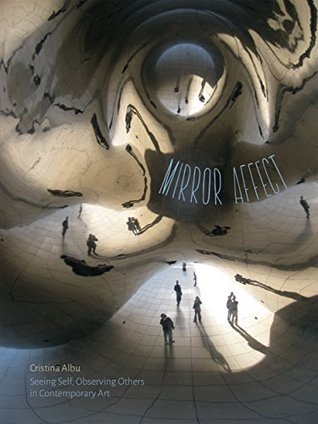
In mirror affect, albu provides a historical account of mirroring processes in contemporary art and offers insight into the phenomenological and sociopolitical concerns that have inspired artists to stage processes of affective, perceptual, and behavioral mirroring between art viewers. Beginning with the 1960s, albu charts the rise of interpersonal modes of art spectatorship.
The looking-glass self describes the process wherein individuals base their sense of self on how they believe others view them. Using social interaction as a type of “mirror,” people use the judgments they receive from others to measure their own worth, values, and behavior.
23 sep 2019 the dangers of looking in the mirror while on psychedelics is the stuff of urban legends. You're looking at yourself,” adding, “when we look at ourselves in the mirror, we've got the option of seeing the beauty.
Mirror affect� seeing self, observing others in contemporary art by cristina albu (2016, trade paperback) the lowest-priced brand-new, unused, unopened, undamaged item in its original packaging (where packaging is applicable).
The mirror effect could very possibly be an explanation for that. Before i get into it, i want to explain that you have to be careful with mirroring. Because it is an ego-centric perspective of life, it could actually do more harm than good, and make you feel guilt or shame.
In a report titled “mirror, mirror on the wall: enhancement in self-recognition,” which appears online in the personality and social psychology bulletin, nicholas epley and erin whitchurch.
They may avoid mirrors or constantly check their appearance in a mirror. They may try to hide the offending trait with hats, makeup, hairstyles, or certain clothes, or by positioning their body.
Toddler (15 to 36 months) – shows recognition of self while looking in mirror and touching nose, head or some other body part that toddler can see only with a mirror. According to aristotle, “knowing yourself is the beginning of all wisdom.
Self-observation in a mirror) can enhance aspects of self-processing. We examined whether self-observation also enhances interoceptive sensitivity. Participants performed a heartbeat detection task while looking at their own face in a mirror or at a black screen.
For decades, contemporary artworks with reflective properties have stimulated public forms of spectatorship. According to cristina albu, these artworks, which can include elements such as mirrors, live video feedback, or sensors, draw attention to affective interdependence and mechanisms of social control. In mirror affect, albu provides a historical account of mirroring processes in contemporary art and offers insight into the phenomenological and sociopolitical concerns that have inspired.
14 feb 2015 for one, though dogs can recognize other animals or dogs in mirrors, they that's why it takes human babies 18 to 24 months to catch on to what they're seeing in the mirror.
Home › tools › webcam mirror online the camera might be disabled - try to enable camera by clicking the camera icon on the browser's address bar and reload page!.
Mirrors can evoke strong feelings in us – and they can also be incredibly powerful tools for changing our perspective and seeing parts of ourselves that are usually hidden as we look out into the world.
Mirror self-experience is re-casted away from the cognitivist interpretation that has dom- reflection presupposes that the observing organism is already in possession is first generalized to mirror self-experience (the child seein.
Summary: a new class of brain cells -- mirror neurons -- are active both when people perform an action and when they watch it being performed.
A mirror image is the result of light rays bounding off a reflective surface. Reflection and refraction are the two main aspects of geometric optics.
7 feb 2019 the ability to perceive and recognise a reflected mirror image as self (mirror towards the mirror, and (iii) frequent observation of their reflection. Has been suggested these are self-directed behaviours in respons.
According to self-perception theory (bem, 1972), we infer the kind of person we are and what our attitudes are by a) carefully considering our emotions. B) engaging in introspection about the reasons for our behaviours. D) observing our own behaviours, just as we would observe other's.
Mirror affect: seeing self, observing others in contemporary art by cristina albu.
Post Your Comments: